


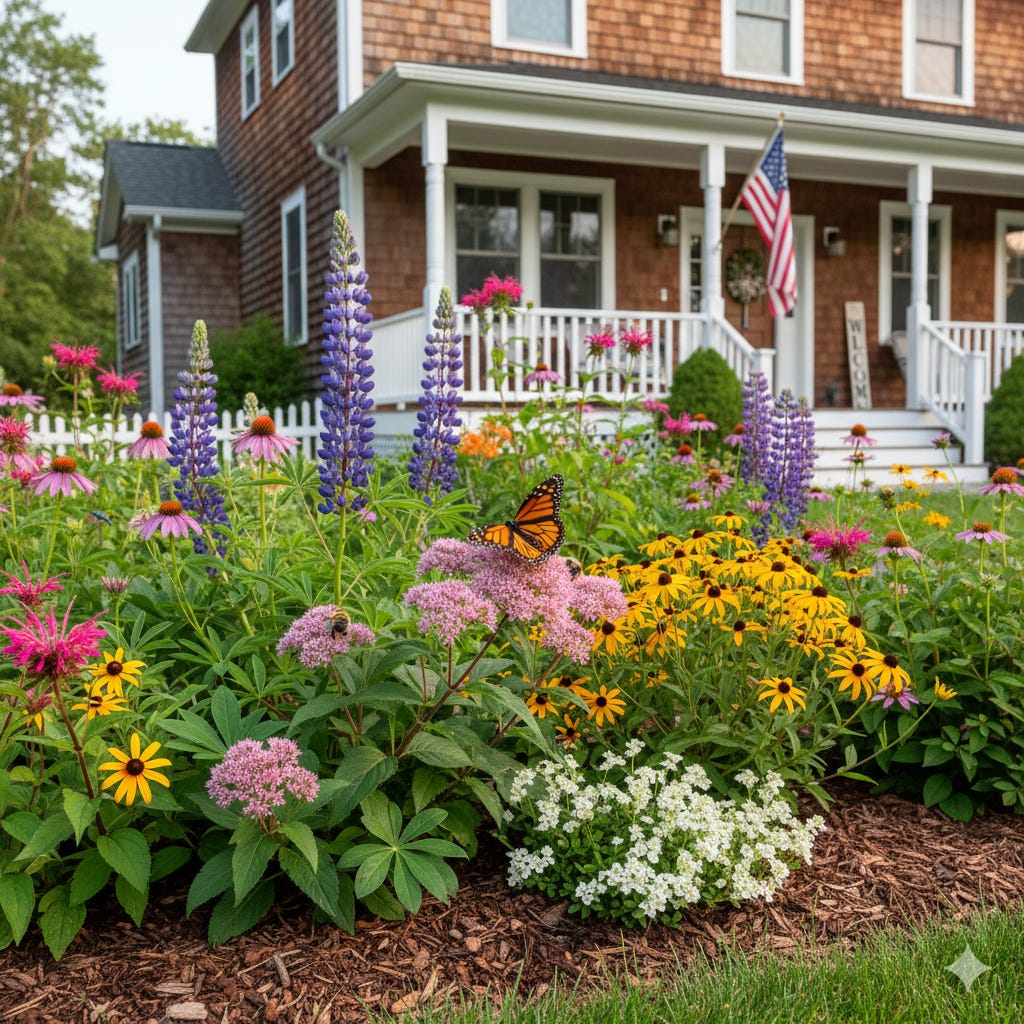
Snow is still on the ground in The Gardening Scout’s New Jersey home town, but we are still thinking about our plans for spring. As always, our goal for our own properties and those of our community members is to make landscaping choices that don’t just look good, but that actively support our local ecosystem, conserve water, and save us time and money in the long run.
Therefore, we focus on native plants.
Choosing native plants a vital step towards creating a healthier, more sustainable environment. Here’s why it matters:
Support Local Wildlife: Our native insects, birds, and other animals have co-evolved with native plants. These plants provide the specific food sources (nectar, pollen, seeds, leaves) and shelter that local wildlife needs to survive and thrive. Think of monarch butterflies and milkweed – an iconic native pairing!
In fact, in the Deals section below, you’ll see that the Live Monarch Foundation is giving away milkweed seeds since they’re so vital to butterfly survival.
Water Conservation: Native plants are perfectly adapted to our local climate and soil conditions. This means once established, they require significantly less supplemental watering than non-native species, especially during dry spells. Less watering equals lower water bills and a reduced environmental footprint.
Low Maintenance, High Impact: Because they’re at home here, native plants are generally more resistant to local pests and diseases, and they don’t need excessive fertilizers or pesticides. This translates to less work for you, fewer chemicals in our waterways, and a healthier environment for everyone.
Protect Our Watersheds: Central New Jersey, like so many other places, is home to crucial waterways. Native plants, with their deep root systems, help prevent soil erosion and filter stormwater runoff, keeping pollutants out of our rivers and streams.
A check list to get started.
Ready to make a difference this spring? Below are some actionable steps for homeowners and business owners to begin their native plant journey.
However, this is a bit customized to USDA Zone 7, an area of the country that gets 45-50 inches of rain on average annually and experiences cold winters. New Jersey, Virginia, Maryland, and Delaware are among the states that mostly fall within Zone 7. Farther down this section, I have included some tips on how to adapt this check list for your particular region and climate.
1. Observe and Plan: Before you dig, take some time to observe your property.
Sunlight: Map out how much sun different areas receive throughout the day (full sun, partial sun, shade).
Soil: Get a basic understanding of your soil type (sandy, clay, loamy) and drainage.
Existing Plants: Identify what you already have. Are there any invasive species you should consider removing? (Common culprits in NJ include English ivy, Japanese barberry, and burning bush.)
Your Goals: Do you want to attract birds? Create a rain garden? Replace a portion of your lawn?
2. Start Small (or Go Big!): You don’t have to overhaul your entire property at once.
Focus on one area: Choose a small garden bed, a border along your house, or even a single container.
Create a Pollinator Patch: Dedicate a sunny spot to nectar-rich native flowers that will attract bees and butterflies.
3. Choose the Right Native Plants for Central NJ: Here are some fantastic, readily available native plants that thrive in our region:
For Sunny Spots:
Milkweed (Asclepias spp.): Essential for monarch butterflies.
Black-eyed Susan (Rudbeckia hirta): Cheerful, drought-tolerant, and great for pollinators.
Purple Coneflower (Echinacea purpurea): A classic, long-blooming favorite.
Wild Bergamot/Bee Balm (Monarda fistulosa): Attracts hummingbirds and bees.
Little Bluestem (Schizachyrium scoparium): A beautiful native grass that provides winter interest.
For Shady to Part-Shade Areas:
Foamflower (Tiarella cordifolia): Delicate white blooms, great groundcover.
Wild Ginger (Asarum canadense): Unique foliage and subtle flowers.
Ferns (various native species): Ostrich fern, Christmas fern, Sensitive fern – great for texture.
Shrubs & Trees:
Serviceberry (Amelanchier canadensis): Early spring blooms, edible berries for birds and people.
Redbud (Cercis canadensis): Stunning pink flowers in early spring.
Inkberry Holly (Ilex glabra): Evergreen shrub, great for winter interest and bird food.
4. Where to Find Native Plants: Look for reputable nurseries that specialize in or carry a good selection of native plants. Ask if they use neonicotinoid pesticides, which can harm pollinators – ideally, you want plants grown without these chemicals. Local native plant sales (often hosted by environmental groups) are also excellent resources. In addition, local public libraries sometimes have seed libraries where you can pick up native plant seeds free of charge.
5. Prep Your Beds & Plant:
Remove Weeds: Clear the area of existing weeds and turfgrass.
Improve Soil (if needed): While native plants are adaptable, incorporating some compost can always help improve soil structure and fertility.
Planting: Follow standard planting guidelines – dig a hole twice as wide as the root ball, ensure the plant is at the correct depth, and water thoroughly after planting.
6. Water and Mulch (Initially): Even native plants need regular watering during their first year to establish strong root systems. Apply a layer of natural mulch (like shredded leaves or wood chips) to conserve moisture, suppress weeds, and regulate soil temperature.
How to adapt this for other areas.
Step 1: Find your Ecoregion. Don’t just look at the state level; look at the environment (e.g., “Coastal Plain” vs. “Piedmont”).
Step 2: Use a Local Database. The National Wildlife Federation’s Native Plant Finder allows you to enter any zip code to get a list of the best plants for that specific spot.
Step 3: Visit a Local “Chapter.” Most states have a Native Plant Society (like the Native Plant Society of New Jersey or the California Native Plant Society) that provides hyper-local lists.
This spring, if you follow this basic check list, you’ll be well on your way to creating a more sustainable, environmentally friendly and affordable yard.
Don’t Miss These Deals
American Hazelnut Tree - $24.95 at Northern Ridge Nursery (typically $35)
Plant a hazelnut tree and you’re feeding wildlife for decades while growing your own nuts. Squirrels and deer love hazelnuts, but so do you - fresh hazelnuts taste nothing like store-bought. Northern Ridge has American Hazelnut trees (2-3ft bare root) in stock and that will ship now through early March. These produce nuts in 3-4 years and feed wildlife year-round.
Cedar Bat House Kit - $40 at Nelson Nature Shop on Etsy
A single bat devours up to 1,000 mosquitoes per hour - your personal aerial pest control squad working the night shift. This Nelson Nature Shop cedar bat house kit’s DIY assembly means you get quality cedar construction without the markup. Install it 12+ feet high facing southeast, and by summer you’ll have dozens of winged mosquito assassins calling your yard home.
Dual-Chamber Compost Tumbler - $71.99 on Amazon (typically ~$80)
Turn kitchen scraps into garden gold without the mess or smell. This VIVOSUN dual-chamber composter lets one side finish cooking while you add fresh scraps to the other for continuous compost production. Dual chambers mean finished compost in 6-8 weeks while you keep feeding the cycle.
White Dutch Clover Seed - $14.95 on eBay (typically ~$20)
Clover is the lazy gardener’s secret weapon. It gathers nitrogen from the air so you can ditch the synthetic fertilizers forever. Your lawn literally feeds itself while providing critical early-spring nectar for emerging bees. SeedRanch has 1 lb of nitro-coated inoculated white dutch clover for $14.95 with free shipping. Late February is prime time to overseed - get it down before the spring rains do the watering for you.
Creeping Thyme Seeds - $3.48 at Walmart (typically ~$15)
Replace that thirsty grass with a fragrant carpet that feeds pollinators and survives on neglect. Creeping thyme blooms pink in summer, attracts bees and butterflies, handles foot traffic, and needs zero mowing. Everwilde Farms has 2,000 seeds for just $3.48 at Walmart. Plant now for established ground cover by summer.
Native Milkweed Asclepias - FREE! (typically ~$12…but they’d love a donation)
Monarch butterflies literally cannot survive without milkweed. It’s the only plant their caterpillars can eat. Plant native milkweed and you’re creating a nursery for one of nature’s greatest migrations. Live Monarch Foundation sends 15+ free milkweed seeds (plus growing instructions) to kids, educators, and folks who need them. Just send a self-addressed stamped envelope to help save the monarchs. These aren’t just flowers - they’re flight fuel for 2,000-mile journeys.
Bokaski Bin Kit - $45 at TeraGanix (we were looking for these at $40, but we’re highlighting now because these are hard to find right now and this feels like a deal)
Turn every food scrap - even meat and dairy - into soil gold with Japanese fermentation magic. Bokashi lets you compost what regular composters can’t handle, with zero smell and no mess. This TeraGanix Essential Kit includes everything: 4.4-gallon bucket, bokashi bran, and full instructions for $45 (was $59). Made from 75% recycled materials, it transforms your kitchen waste into nutrient-rich pre-compost in just 2 weeks.
Serviceberry Tree (Amelanchier) - $35 at Elmore Roots (this is for folks in Vermont only since they don’t ship; you gotta pick it up at the store)
Meet the ultimate spring awakener: A serviceberry blooms with clouds of white flowers while everything else is still sleeping, then feeds you AND the birds with sweet berries by June. One tree supports 40+ moth and butterfly species, which means food for baby birds all season. Elmore Roots has native Amelanchier canadensis (1-2 ft) in stock now. Plant it this month and you’ll have America’s first spring dessert in 2-3 years.
Red Currant Bush - $10.95 at Northern Ridge Nursery (typically ~$20)
Grow your own vitamin C bombs in the shadiest corner of your yard. Currants are one of the few fruits that actually thrive in partial shade - and birds AND humans go wild for the tart red berries. Northern Ridge has 1-2 ft bare root Red Currant bushes on sale for $10.95. Self-pollinating, so one bush produces fruit. Ships now through early spring - perfect timing to get roots established before summer heat.
Resource of the Week
Rutgers University has a Soil Testing Laboratory, where basically anyone can send in soil samples for a variety of tests for a small fee.
The benefits of soil testing from Rutgers’ site…
Soil testing is economically prudent. The appropriate application of nutrients and/or lime can save money. Don’t buy nutrients that your soil doesn’t need; instead, invest in those nutrients that will bring about healthy growth and yields.
To apply optimal levels of nutrients or lime to your soil, it is necessary to know the existing pH and the availability of essential plant nutrients in the soil. Having too much or too little of these nutrients or limestone can be harmful to plant growth.
Soil testing is an environmentally responsible practice. Applying fertilizer or other nutrient sources incorrectly can lead to nitrate or phosphorus contamination of our water resources. By applying fertilizer appropriately, you can ensure that you are “feeding” your plants in an environmentally friendly and “green” way.
Check out the Rutgers Soil Testing Lab page for residential properties here.
As always, you can follow The Gardening Scout on Instagram, BlueSky and TikTok.